
Business
Nigeria misses OPEC quota, produces 1.38m bpd in March


By Udeme Akpan, Energy Editor
The Organization of the Petroleum Exporting Countries (OPEC) has disclosed that Nigeria’s crude oil output, excluding condensate, rose to 1.38 million barrels per day (bpd) in March 2026, up from 1.31 million bpd recorded in February.
In its March 2026 Monthly Oil Market Report (MOMR), OPEC stated that the figures were based on data obtained through direct communication with Nigerian authorities.
However, data from secondary sources showed that Nigeria’s production stood at 1.46 million bpd in March, compared to 1.44 million bpd in February.
Despite the marginal increase, Nigeria fell short of both its OPEC production quota of 1.5 million bpd and its 2026 budget benchmark of 1.84 million bpd, which includes condensate.
Nonetheless, Nigeria retained its position as Africa’s leading oil producer, ahead of Libya, which recorded output of 1.30 million bpd during the period.
Meanwhile, industry regulators and operators have outlined a coordinated roadmap to boost Nigeria’s crude oil production to three million bpd, emphasising the need for sustained regulatory reforms, increased investment, digitalisation, and critical infrastructure development.
Speaking at the 26th Oloibiri Lecture Series and Energy Forum in Abuja, the Chief Executive of the Nigerian Upstream Petroleum Regulatory Commission (NUPRC), Mrs. Oritsemeyiwa Eyesan, said the 3mbpd target by 2030 is achievable under the current policy direction.
She noted that the goal builds on a near-term target of two million bpd by 2027 and would depend on frameworks that attract capital, encourage innovation, and enable digital oilfield operations.
Eyesan added that the Petroleum Industry Act (PIA) 2021 has repositioned the upstream sector through a regulatory framework anchored on certainty, transparency, and performance, helping to restore investor confidence.
According to her, recent projects such as Bonga North, Ubeta, and HI developments—collectively unlocking over $10 billion in investments—demonstrate the impact of clear policies and streamlined approvals.
She further stressed that digital transformation, including real-time data systems, predictive maintenance, and advanced analytics, would play a critical role in reducing costs, minimising downtime, and boosting output.
Eyesan also highlighted improved oil recovery as a key driver of production growth, noting that new performance-based frameworks now compel operators to maximise reservoir value.

By Elizabeth Adegbesan
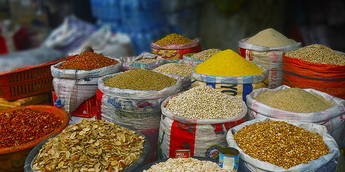
Despite the moderation in inflation rate reported by the National Bureau of Statistics, NBS, the financial burden of feeding on Nigerian households may have intensified as the national average Cost of a Healthy Diet (CoHD) climbed to N1,541 per adult per in March 2026, about 4.4 per cent up from N1,477 in March 2025.
The Bureau had reported a steady downward trend in inflation rate up till February 2026 but the trend reversed marginally in March and April.
On a month-on-month basis, nutritious food prices rose by 1.89 percent from February 2026.
However, NBS noted that the upward movement in CoHD was driven by price hikes across almost all essential food groups.
It stated: “The national average Cost of a Healthy Diet was N1,541 per adult per day in March 2026.
“On a month-on-month basis, the cost increased by 1.89 percent compared to February 2026 (N1,513).
“The increase was driven by the rise in prices across all food groups.”
Data from the report revealed sharp geographical divides in food affordability.
Southern states bear the heaviest financial burden, while northern regions enjoy lower costs.
NBS said: “At the State level Ekiti, Imo and Abia States recorded the highest cost at N2,091, N2,052, and N1,970 respectively.
“Adamawa, Federal Capital Territory and Taraba State accounted for the lowest costs at N1,004, N1,113 and N1,149 respectively.”
Zonally, the South-East emerged as the most expensive region at N1,899 per day, followed closely by the South-West at N1,801.
The North-East remained the most affordable zone at N1,233 daily.
The report further showed that meeting dietary guidelines for animal-source foods proved to be the most expensive component.
This category accounted for 39 percent of total daily costs while delivering just 13 percent of total calorie intake.
Fruits and vegetables also strained budgets due to their low calorie-to-price ratio.
Fruits consumed 16 percent of the daily budget for a mere 7 percent of calories.
Vegetables consumed 14 percent of the budget while providing only 5 percent of calories. Legumes, nuts, and seeds remained the most economical choice, representing just 7.0 percent of total costs.
The post Food Crisis: Cost of healthy diet rises further — NBS Report appeared first on Vanguard News.

By Obas Esiedesa, Abuja
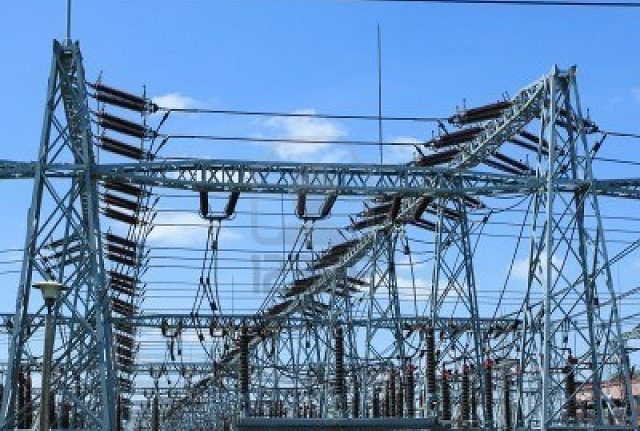
The Federal Government has unveiled new guidelines for the safe and efficient interconnection of solar mini-grids to electricity distribution networks, aimed at accelerating renewable energy deployment and improving electricity access across Nigeria.
Speaking at the launch in Abuja, the Managing Director of the Nigerian Electricity Management Services Agency (NEMSA) and Chief Electrical Officer of the Federation, Engr. Olusegun Adesayo, described the document as “a major milestone in Nigeria’s drive towards achieving a safe, reliable, sustainable and inclusive electricity supply industry.”
According to him, solar mini-grids have emerged as a critical solution for electrifying unserved and underserved communities, making clear operational standards necessary.
“The Guidelines provide comprehensive procedures, technical requirements, interconnection models and operational standards for integrating solar mini-grids into distribution networks without compromising grid stability, power quality, system reliability and public safety.
“The Guidelines seek to reduce uncertainties for investors and developers while strengthening collaboration among Distribution Companies, mini-grid developers, regulators and other stakeholders,” he said..
Adesayo added that the framework aligns with the provisions of the Electricity Act 2023, the Mini-Grid Regulations 2026 and relevant national and international standards, including IEC standards.
Also speaking, Permanent Secretary, Federal Ministry of Power, Alhaji Mahmuda Mamman, represented by the Director of Distribution, Mustapha Abba, said renewable energy, particularly solar mini-grids, plays a strategic role in expanding electricity access, improving energy security and promoting sustainable economic growth.
“As this segment of the electricity market continues to grow, it becomes imperative to establish clear technical and operational frameworks that will ensure safety, reliability and efficient coordination between solar mini-grid systems and existing distribution infrastructure,” he said.
“The Guidelines being launched today provide an important framework for ensuring the safe, reliable and efficient interconnection of solar mini-grids to distribution networks across Nigeria.”
Mamman said the guidelines would strengthen investor confidence, reduce technical and regulatory uncertainties, improve system reliability and support the sustainable integration of renewable energy solutions into Nigeria’s electricity network.
Representing the Delegation of the European Union to Nigeria and ECOWAS, Programme Manager, Energy and Circular Economy, Mr. Godfrey Ogbemudia, said: “The launch of these Guidelines is particularly significant. We are confident that the Guidelines will provide consistency and increase investor confidence in interconnected mini-grid projects.”
He reaffirmed the European Union’s commitment to supporting Nigeria’s energy transition and electrification ambitions, while Head of Development Cooperation at the German Embassy, Dr. Karin Jansen, said Germany remains committed to supporting Nigeria’s efforts to expand energy access, strengthen institutions and mobilise private investment in renewable energy.
The post FG moves to accelerate mini-grid deployment with new guidelines appeared first on Vanguard News.

By Peter Egwuatu
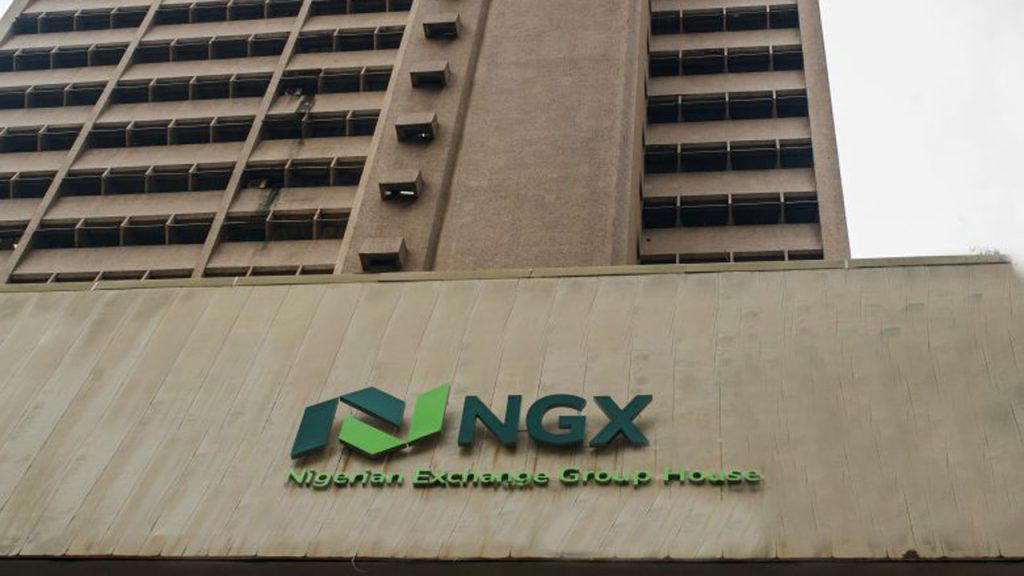
Group Managing Director/CEO, Nigerian Exchange Group (NGX Group), Temi Popoola, has urged the Central Bank of Nigeria’s (CBN) Monetary Policy Committee (MPC) to treat capital market development as a macroeconomic necessity, arguing that the effectiveness of monetary policy increasingly depends on the depth, liquidity, and coherence of Nigeria’s financial markets.
Popoola made this call in a presentation delivered during a session at the CBN Monetary Policy Committee, MPC workshop themed: “Structure and Behaviour of Nigeria’s Equity and Government Debt Markets: Implications for Monetary Policy Effectiveness.”
Represented by Jumoke Olaniyan, Group Chief Strategy Officer, NGX Group Popoola, noted that monetary policy decisions travel through market architecture before reaching households and businesses, and weak market structures can dilute policy effectiveness regardless of the stance adopted by the MPC.
The post NGX Group advocates stronger capital market integration into monetary policy framework appeared first on Vanguard News.


The 10 Players Sheikh Jassim Wanted to Sign For Man United

Man Utd Seriously Pushing to Sign Bazoumana Toure Ahead of Newcastle

Bandits abduct mother, child in fresh Kogi attack

Simi Sanya and Femi Dapson Are Now Legally Married and It Is Beautiful to See

FCT Area Council Election: Live results from polling units

Premier League Set-Piece Goals (2025/2026)
-
 Sports1 day ago
FA to ‘Consider England Position’ on Thomas Partey 2026 World Cup Handshake
-
 Politics2 days ago
2027: Jonathan not power-hungry – Former aide
-
 Sports16 hours ago
Sadio Mane: ‘Mo Salah Was Not Liverpool’s Best Finisher
-
 Sports11 hours ago
Gilberto Silva Ranked Gerrard, Lampard and Scholes From Worst to Best
-

 Sports2 days ago
Celtic Agree to Terminate Stephen Welsh’s Contract Early
-
 Sports2 days ago
Yan Diomande Summer Transfer Preference Revealed
-
 Sports1 day ago
Liverpool Hold Talks to Sign PSG Star Iliya Zabarnyi
-

 Metro2 days ago
Ogun is safe’ – Police debunk false banditry alert in Ifo, Ota