
Business
FG incurs N418bn power subsidy


By Mather Godwin
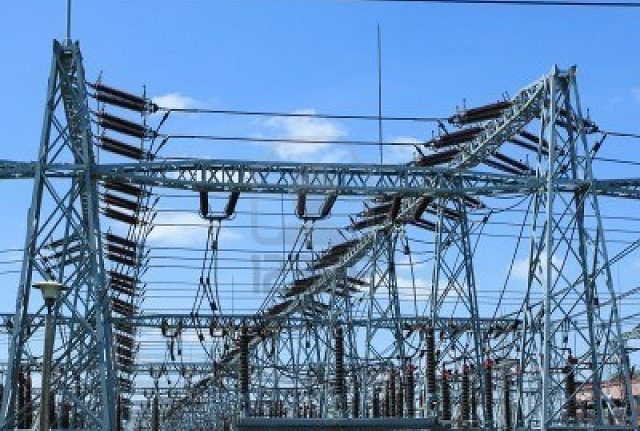
The Federal Government incurred a subsidy obligation of N418.79 billion in the fourth quarter of 2025, Q4’25 according to data from the Nigerian Electricity Regulatory Commission, NERC).
The electricity market regulator in its Q4’25 Quarterly report, noted that total amount invoiced by the GenCos for energy delivered to each DisCo and the Differential Remittance Obligation- DRO-adjusted Nigerian Bulk Electricity Trading Plc (NBET) invoice to the respective DisCos during 2025/Q4, represented a N39.96 billion (-8.71%) reduction in subsidy compared to N458.75 billion in Q3’25.
Government subsidy accounted for 52.30% of the total GenCo invoice, which is a 6.60 percentage point decrease compared to Q3’25, when the subsidy accounted for 58.63% of the total GenCo invoice.
NERC noted that the reduction in subsidy payment was due to the increase in energy allocated to Band A customers from 40% to 45%, reflecting the strategic direction of the government to improve the quality of supply to consumers.
In Q4’25, the DRO-adjusted invoice from NBET to the DisCos was N386.13 billion, while the total remittance made was N359.27 billion, which translates to 93.04% remittance performance.
Comparatively, in Q3’25, the DRO-adjusted invoice from NBET to DisCos was N323.7 billion, and the total remittance was N308.25 billion, which translated to 95.23% remittance performance.
“In the absence of cost-reflective tariffs, the Government undertakes to cover the resultant gap (between the cost-reflective and allowed tariff) in the form of tariff subsidies.”
Disaggregated remittance performance of the DisCos to NBET in Q4’25 shows that all DisCos except Yola (99.42%), Benin (98.30%), Ibadan (95.58%), Kano (75.14%)25, Jos (49.80%), and Kaduna (40.73%) achieved 100% remittance performance.
The post FG incurs N418bn power subsidy appeared first on Vanguard News.

By Obas Esiedesa, Abuja
The Federal Government has unveiled new guidelines for the safe and efficient interconnection of solar mini-grids to electricity distribution networks, aimed at accelerating renewable energy deployment and improving electricity access across Nigeria.
Speaking at the launch in Abuja, the Managing Director of the Nigerian Electricity Management Services Agency (NEMSA) and Chief Electrical Officer of the Federation, Engr. Olusegun Adesayo, described the document as “a major milestone in Nigeria’s drive towards achieving a safe, reliable, sustainable and inclusive electricity supply industry.”
According to him, solar mini-grids have emerged as a critical solution for electrifying unserved and underserved communities, making clear operational standards necessary.
“The Guidelines provide comprehensive procedures, technical requirements, interconnection models and operational standards for integrating solar mini-grids into distribution networks without compromising grid stability, power quality, system reliability and public safety.
“The Guidelines seek to reduce uncertainties for investors and developers while strengthening collaboration among Distribution Companies, mini-grid developers, regulators and other stakeholders,” he said..
Adesayo added that the framework aligns with the provisions of the Electricity Act 2023, the Mini-Grid Regulations 2026 and relevant national and international standards, including IEC standards.
Also speaking, Permanent Secretary, Federal Ministry of Power, Alhaji Mahmuda Mamman, represented by the Director of Distribution, Mustapha Abba, said renewable energy, particularly solar mini-grids, plays a strategic role in expanding electricity access, improving energy security and promoting sustainable economic growth.
“As this segment of the electricity market continues to grow, it becomes imperative to establish clear technical and operational frameworks that will ensure safety, reliability and efficient coordination between solar mini-grid systems and existing distribution infrastructure,” he said.
“The Guidelines being launched today provide an important framework for ensuring the safe, reliable and efficient interconnection of solar mini-grids to distribution networks across Nigeria.”
Mamman said the guidelines would strengthen investor confidence, reduce technical and regulatory uncertainties, improve system reliability and support the sustainable integration of renewable energy solutions into Nigeria’s electricity network.
Representing the Delegation of the European Union to Nigeria and ECOWAS, Programme Manager, Energy and Circular Economy, Mr. Godfrey Ogbemudia, said: “The launch of these Guidelines is particularly significant. We are confident that the Guidelines will provide consistency and increase investor confidence in interconnected mini-grid projects.”
He reaffirmed the European Union’s commitment to supporting Nigeria’s energy transition and electrification ambitions, while Head of Development Cooperation at the German Embassy, Dr. Karin Jansen, said Germany remains committed to supporting Nigeria’s efforts to expand energy access, strengthen institutions and mobilise private investment in renewable energy.
The post FG moves to accelerate mini-grid deployment with new guidelines appeared first on Vanguard News.

By Peter Egwuatu
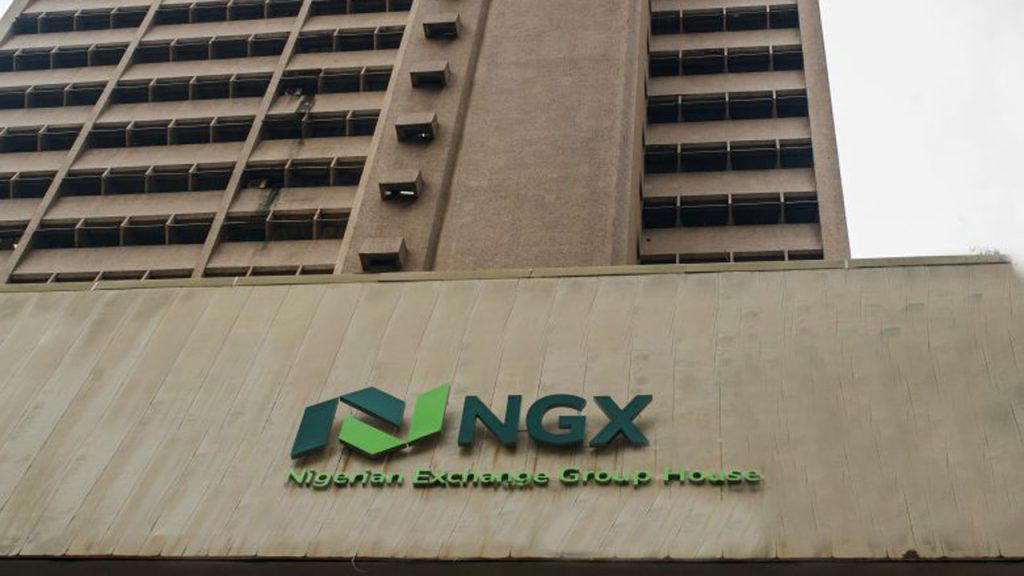
Group Managing Director/CEO, Nigerian Exchange Group (NGX Group), Temi Popoola, has urged the Central Bank of Nigeria’s (CBN) Monetary Policy Committee (MPC) to treat capital market development as a macroeconomic necessity, arguing that the effectiveness of monetary policy increasingly depends on the depth, liquidity, and coherence of Nigeria’s financial markets.
Popoola made this call in a presentation delivered during a session at the CBN Monetary Policy Committee, MPC workshop themed: “Structure and Behaviour of Nigeria’s Equity and Government Debt Markets: Implications for Monetary Policy Effectiveness.”
Represented by Jumoke Olaniyan, Group Chief Strategy Officer, NGX Group Popoola, noted that monetary policy decisions travel through market architecture before reaching households and businesses, and weak market structures can dilute policy effectiveness regardless of the stance adopted by the MPC.
The post NGX Group advocates stronger capital market integration into monetary policy framework appeared first on Vanguard News.


•Food import share shrinks as total imports jump 28%
By Babajide Komolafe
Nigeria’s spending on food imports declined by 7.4 per cent, year-on-year to $2.34 billion in 2025, signaling a moderation in the country’s dependence on imported food products despite a sharp increase in overall import expenditure. Data on food imports obtained from the Central Bank of Nigeria, CBN, quarterly statistical bulletin, fourth quarter 2025. Q4’25 showed that food imports fell to $2.343 billion in 2025 from $2.530 billion recorded in 2024, representing a decline of $186.42 million of 7.4 per cent year-on-year.
The decline comes after food import spending had risen by 18.8 per cent, YoY to $2.53 billion in 2024 from $2.129 billion in 2023, indicating a reversal of the upward trend witnessed in the previous year.
Further analysis revealed that food imports accounted for a smaller share of the nation’s total import bill in 2025. The ratio of food imports to total imports dropped significantly to 11.8 per cent in 2025 from 16.3 per cent in 2024.
The decline in food import share occurred despite relatively stable food import spending, largely because overall imports grew at a much faster pace during the review period.
According to CBN data, Nigeria’s total imports rose by 28 per cent, YoY to $19.897 billion in 2025 from $15.544 billion in 2024, representing an increase of $4.353 billion. This followed an earlier rise from $14.276 billion recorded in 2023.
Analysis of quarterly food import spending indicated that three of the four quarters in 2025 recorded lower import values compared to corresponding periods in 2024.
Food imports declined by 20.3 per cent, YoY to $550.09 million in Q1’25 from $689.88 million in Q1’24. In Q2 ’25, food import spending dropped by 6.0 per cent, YoY to $515.04 million from $547.70 million in Q2’24.
However, Q3’35 recorded the only year-on-year increase during the year, with food imports rising by 3.2 per cent, YoY to $653.85 million from $633.63 million in Q3’24.
The upward movement was short-lived as food import spending fell again in Q4 ’25 by 5.2 per cent, YoY to $624.36 million from $658.55 million in Q4’24.
The post Nigeria spends $2.34bn on food imports in 2025, down 7.4% appeared first on Vanguard News.


Man dies trapped inside Kano well while recovering mobile phone

Five abductees in Kwara community feared dead in bandits captivity

Three former Osun lawmakers politically linked to Sen Omisore dump APC

Simi Sanya and Femi Dapson Are Now Legally Married and It Is Beautiful to See

FCT Area Council Election: Live results from polling units

Premier League Set-Piece Goals (2025/2026)
-
 Sports15 hours ago
FA to ‘Consider England Position’ on Thomas Partey 2026 World Cup Handshake
-
 Politics2 days ago
2027: Jonathan not power-hungry – Former aide
-
 Metro2 days ago
Police debunk bandit invasion rumours in Lagos, arrest 15
-

 Sports2 days ago
Everton Lead Race to Sign Midfielder Hayden Hackney: David Ornstein
-
 Sports7 hours ago
Sadio Mane: ‘Mo Salah Was Not Liverpool’s Best Finisher
-

 Sports2 days ago
Celtic Agree to Terminate Stephen Welsh’s Contract Early
-
 Business2 days ago
Nigeria, Liberia move to deepen maritime cooperation, capacity building
-
 Sports1 day ago
Liverpool Hold Talks to Sign PSG Star Iliya Zabarnyi